
Are you tired of spending endless hours on repetitive tasks that slow down your online store? Imagine having a powerful tool that takes care of everything from managing inventory to sending marketing emails—automatically.
That’s exactly what ecommerce automation does for you. It frees up your time so you can focus on growing your business and delighting your customers. Among all the options out there, Bizmation stands out as the best ecommerce automation solution.
Ready to discover how Bizmation can transform your online store and boost your sales effortlessly? Keep reading to find out!
E-commerce automation uses software to handle routine online store tasks like inventory updates and customer messages. Bizmation offers simple tools that save time and reduce errors, helping businesses run smoothly without extra effort. It’s a smart way to keep your store efficient and organized.
Ecommerce automation uses technology to perform tasks automatically. It helps online stores run smoothly and save time. Repetitive jobs like sending emails, updating inventory, and managing orders get done without manual work.
This automation reduces errors and speeds up daily operations. It lets store owners focus on growing their business and improving customer experience.
Automation handles marketing, customer support, inventory, and pricing. It sends promotional emails and messages to customers. It answers common questions using chatbots or automated replies.
Inventory updates happen in real-time. Pricing changes reflect market demand or competitor rates quickly. This keeps the store competitive and efficient.
Automation saves time by cutting down manual work. It improves accuracy in order processing and stock management. Customers get faster responses and personalized offers.
Sales often increase because marketing runs consistently. Business owners gain insights from automated reports to make smart decisions.
Bizmation offers easy-to-use tools tailored for online stores. It integrates well with various ecommerce platforms. The system automates many tasks without complex setup.
Bizmation provides reliable support and regular updates. It helps small and large businesses improve efficiency and customer satisfaction. Using Bizmation means less stress and more growth.

Ecommerce automation offers many benefits for online stores. It helps reduce manual work and saves time. Stores can focus more on growing their business. Automation improves accuracy and consistency in daily tasks. It supports better customer experiences and increases sales.
Using ecommerce automation tools like Bizmation can simplify store management. These tools handle repetitive tasks smoothly. They help online stores run efficiently with fewer errors. Here are some key benefits of ecommerce automation for online shops.
Automation streamlines order processing from start to finish. It updates stock levels instantly and reduces errors. Customers receive accurate order status updates faster. This speeds up shipping and improves satisfaction. Store owners spend less time fixing order issues.
Automated messages keep customers informed at every step. Emails and texts send order confirmations and shipping alerts. Automated responses handle common questions quickly. This builds trust and keeps customers engaged. It also frees staff to focus on complex support.
Automation tracks inventory in real-time across all channels. It alerts when stock is low or overstocked. This prevents lost sales from out-of-stock items. Stores can reorder products on time without delays. Inventory reports help plan better purchasing decisions.
Automated marketing campaigns target customers based on behavior. Personalized emails and offers boost customer interest. Automation schedules social media posts and ads. This keeps the store visible without extra effort. Marketing runs smoothly even with a small team.
Automation reduces the need for manual data entry. It cuts down staff hours on routine tasks. This lowers operating costs and increases profit margins. Store owners can use saved time for strategy and growth. Automation helps run the business smarter, not harder.
Core ecommerce automation tasks streamline essential business operations. These tasks help save time and reduce errors. Automation supports smooth workflows and better customer experiences. Bizmation excels at automating key ecommerce functions efficiently.
Automation handles sending emails and social media posts. It targets customers based on behavior and preferences. Campaigns run automatically without manual effort. This improves reach and engagement for online stores.
Automated chatbots answer common questions instantly. They provide 24/7 support without staff needed. Automation routes complex issues to human agents quickly. This keeps customers happy and reduces wait times.
Automation tracks stock levels in real time. It alerts when products run low or are out of stock. Orders and restocking happen smoothly without delays. This prevents overselling and lost sales.
Automation changes prices based on market trends or rules. It adjusts discounts during promotions automatically. Price updates happen fast and accurately. This helps stay competitive and maximize profits.
Bizmation stands out as a top choice for ecommerce automation. It simplifies store management and boosts efficiency. The platform offers tools that save time and reduce errors. Users gain control over daily tasks with ease. Bizmation’s design focuses on user-friendly features and reliable performance.
Bizmation connects easily with popular ecommerce platforms. It works well with Shopify, WooCommerce, and Magento. This allows users to automate processes across multiple stores. No need for complex setup or coding skills. The integration runs smoothly to keep operations steady.
The system tracks orders and updates inventory in real time. It prevents stockouts and overselling automatically. Bizmation adjusts stock levels as sales happen. This helps maintain accurate records without manual work. Store owners save time and avoid mistakes.
Bizmation sends targeted marketing messages to customers. It can create email campaigns based on buyer behavior. This helps increase sales and customer engagement. The platform customizes offers to suit each shopper. Marketing efforts become smarter and more effective.
Bizmation includes tools to handle customer questions quickly. It automates responses to common inquiries. This improves customer satisfaction and saves support time. The system also tracks support tickets and feedback. Businesses can respond faster and keep customers happy.
Security is a priority in Bizmation’s design. It protects sensitive customer and business data. The platform scales easily as the business grows. It supports small shops and large enterprises alike. Users can trust Bizmation to keep their ecommerce safe and reliable.
Boosting sales through ecommerce automation transforms how businesses interact with customers and manage operations. Automation reduces manual work and speeds up processes. It allows businesses to respond faster and deliver better experiences. This leads to higher customer satisfaction and increased sales.
Automation helps send personalized messages to customers. It uses data to understand customer preferences and behavior. This way, businesses can offer relevant promotions and product recommendations. Personalized outreach builds trust and encourages repeat purchases. Timely emails and messages keep customers engaged and interested.
Order processing becomes quicker and error-free with automation. It handles tasks like inventory updates, payment confirmation, and shipping notifications automatically. This reduces delays and mistakes in fulfilling orders. Faster processing improves customer satisfaction and loyalty. Businesses save time and focus on growing sales instead of routine tasks.
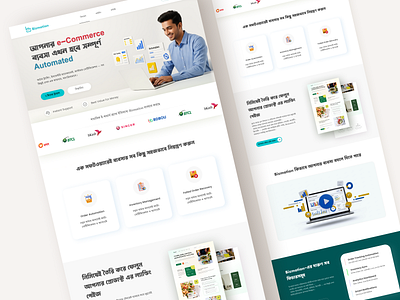
Integration with popular platforms is essential for ecommerce automation tools. It helps businesses connect their online stores with various services. This connection allows smooth data flow and efficient management of tasks. Bizmation excels in integrating with major ecommerce platforms. It supports many popular platforms, making automation easy for users.
With proper integration, Bizmation syncs orders, inventory, and customer data automatically. This reduces manual work and errors. Businesses save time and focus on growth. Integration also enables better marketing and customer service by linking with tools like email and chat apps.
Bizmation connects seamlessly with Shopify stores. It syncs product listings, orders, and stock levels. This helps Shopify sellers automate order processing and inventory updates. The integration supports promotional campaigns and customer notifications. Shopify users can manage their store more efficiently using Bizmation.
WooCommerce is a popular WordPress plugin for online shops. Bizmation integrates directly with WooCommerce stores. It automates inventory tracking, order fulfillment, and customer communication. WooCommerce merchants benefit from reduced manual tasks. Bizmation keeps data consistent across all sales channels.
Amazon sellers face many repetitive tasks daily. Bizmation connects with Amazon Seller Central to simplify these tasks. It automates order management, pricing updates, and shipment tracking. Integration with Amazon helps sellers avoid overselling and stockouts. Bizmation improves efficiency and saves time for Amazon sellers.
eBay is a major marketplace for online sellers. Bizmation integrates with eBay accounts to automate listing and order processes. It syncs product information and updates stock automatically. eBay sellers can handle multiple orders smoothly. Bizmation reduces errors and speeds up order processing.
Bizmation works with popular payment gateways like PayPal and Stripe. This ensures secure and quick payment processing. Payment data syncs with order management for accurate records. Integration with payment gateways helps businesses track revenue easily. It also supports smooth refund and dispute management.
Ecommerce automation adapts to various business models to improve efficiency. Different ecommerce types need distinct automation approaches. Automation helps streamline tasks, reduce errors, and save time in each model. Bizmation stands out as a solution that fits all these ecommerce models.
B2C ecommerce means businesses sell directly to individual customers. Automation manages customer orders, inventory updates, and marketing campaigns. It personalizes emails and promotions for each shopper. Bizmation automates customer service with chatbots and quick responses. This saves time and keeps buyers happy. Automated payment processing also reduces delays and errors.
B2B ecommerce involves transactions between businesses. Orders are usually larger and more complex. Automation handles bulk order processing and approval workflows. It manages invoicing, contract renewals, and customer account details. Bizmation helps track shipments and inventory for multiple buyers. Automation ensures smooth communication between companies. This reduces manual work and speeds up sales cycles.
C2C ecommerce connects consumers who sell to each other. Examples include online marketplaces and auction sites. Automation verifies users and monitors transactions for security. Bizmation automates listing approvals and payment settlements. It also manages dispute resolution processes. Automation helps maintain trust and smooth operations. It supports a safe environment for buyers and sellers alike.
Running an ecommerce store involves many tasks that take time and effort. Common challenges include managing orders, handling customer questions, and updating product details. Automation tools help solve these problems by simplifying and speeding up daily activities. Bizmation stands out by offering smart solutions that fit different ecommerce needs.
Keeping track of inventory is hard without automation. Overstock or stockouts cause lost sales and unhappy customers. Bizmation automatically updates stock levels in real time. It alerts sellers when products run low. This prevents errors and improves customer trust.
Answering many customer questions can overwhelm support teams. Delays hurt the shopping experience. Bizmation uses automated responses for common questions. It routes complex issues to the right team fast. This keeps customers happy and support efficient.
Manual order processing wastes time and causes mistakes. Shipping delays frustrate buyers. Bizmation automates order confirmation and shipping updates. It integrates with delivery services to track packages easily. This speeds up fulfillment and reduces errors.
Creating personalized marketing takes effort and data analysis. Generic messages fail to engage shoppers. Bizmation segments customers and sends targeted campaigns automatically. This drives more sales by showing relevant offers at the right time.
Changing prices manually is slow and risky. Missing market trends can lead to lost revenue. Bizmation monitors competitors and updates prices based on rules. Sellers stay competitive without constant manual work.
The future of ecommerce automation holds exciting possibilities. Technology continues to evolve fast. Automation will become smarter and more efficient. Businesses will save more time and reduce errors. Customers will enjoy faster, smoother shopping experiences.
New tools will make online stores more responsive. Automation will handle complex tasks with ease. It will not only manage routine jobs but also help with decision-making. The future promises better integration between different systems. This will create seamless workflows from marketing to delivery.
AI will play a bigger role in ecommerce automation. It will predict customer needs more accurately. AI-driven chatbots will offer instant, personalized help. Automation will use AI to optimize pricing and inventory. This means fewer stockouts and better sales strategies.
Voice assistants will change how people shop online. Automation will adapt to voice commands. Customers can place orders or ask questions hands-free. Ecommerce systems will process these requests automatically. This trend will make shopping easier for everyone.
Automation will analyze large data sets quickly. It will spot trends and customer preferences in real-time. Businesses can act on insights faster. This will improve marketing campaigns and product recommendations. Data-driven decisions will boost ecommerce success.
Automation will connect all sales channels smoothly. Online, mobile, and in-store experiences will sync perfectly. Orders and customer data will flow across platforms without delay. This creates a consistent brand experience everywhere. Managing multiple channels will become simpler.
RPA will handle more back-end ecommerce tasks. It will process orders, manage returns, and update records automatically. This reduces manual work and errors. Businesses can focus more on growth and customer service. RPA will become a key part of ecommerce operations.

E-commerce automation uses software to handle repetitive tasks like marketing, inventory updates, and customer support. It boosts efficiency, saves time, and improves sales management.
The 4 pillars of automation are resilient, intuitive, secure, and end-to-end processes. These principles ensure reliable, user-friendly, safe, and comprehensive automation solutions.
Top sales automation platforms include Salesforce Sales Cloud for enterprises, HubSpot CRM for marketing alignment, Pipedrive for sales automation, and Zapier for AI integration. Choose based on your business size, needs, and budget for optimal results.
The four types of e-commerce are B2C (business to consumer), B2B (business to business), C2C (consumer to consumer), and C2B (consumer to business). Each type involves different participants and transaction methods.
Ecommerce automation saves time and reduces errors in daily tasks. Bizmation offers easy-to-use tools that help online stores run smoothly. It handles marketing, customer support, pricing, and more without hassle. Using automation lets businesses focus on growth and customers. Choosing Bizmation means reliable support for your ecommerce needs.
Start simplifying your online store’s work today with smart automation.